Showing posts with label Faculty Lane. Show all posts

Saturday, June 27, 2009

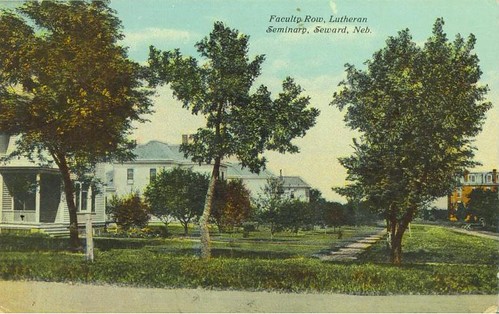
Another Old Photograph of Faculty Row

Tobin Beck provided this old picture of Faculty Row. He scanned the picture from an old postcard.

Faculty Row at Lutheran Seminary (Concordia Teachers College, Concordia University) in Seward, Nebraska

The image has been uploaded to this Flickr webpage. Click on ALL SIZES to see the larger, original size.

The previously posted photographs of Faculty Row are here and here.

This postcard is labeled Faculty Row, Lutheran Seminary, Seward, Neb. The school was called a seminary until 1905, when it was renamed as a college, so the postcard was made before 1905.

The road running horizonally along the bottom of the picture is Columbia Avenue. The houses' front yards are much larger than they were on Faculty Lane.

Tobin commented about the photograph:

The Faculty Row picture is from the early 1900s, judging from the size of the trees in front of the houses. Also Miessler Hall, which was built in 1905, is not visible in the shot, which looks like it was taken from Columbia Avenue looking east.

If you look at the line of trees along the brick sidewalk going back toward Founders, you can see a white post. I'd guess that's about where the lobby of Weller is now.

(Mike: Look for the white post on the Flickr webpage.)

Thursday, June 25, 2009

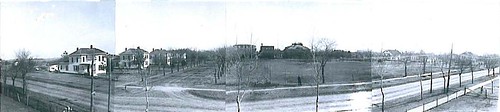
An Old Panoramic Photograph of Concordia Campus

Marvin Bergman, who now occupies the old Sylwester house (Faculty Lane House 1) on North Columbia Avenue, kindly arranged for some old photographs in his possession to be scanned for this blog. One of the photographs is a panorama, consisting of four aligned photographs, of the Concordia campus.

"Old Panarama Photographs of Concordia Teachers College (now Concordia University) in Seward" Nebraska

The image has been uploaded to this Flickr webpage. Click on ALL SIZES above the image to see larger sizes (ORIGINAL is the largest).

The street running horizontally along the bottom of the panorama is North Columbia Avenue. The four old faculty houses are near this street, so this is the original Faculty Row location of those houses. They were moved farther back in mid-1924 to a new street, called Faculty Lane. Therefore, this photograph was taken before mid-1924.

Steve Sylwester explains the photograph:

The road you see along the foreground is Columbia. The outer [most west] house had its west property boundary on Columbia.

The east-west street that was Faculty Row is plainly visible, and it is headed due east in the picture to what is now the front steps of Brommer Hall — and goes directly through the area where Weller Hall now stands while enroute. Founders Hall can be seen in the background on the south side of the street.

Faculty Row existed more-or-less on the land that is now between Link Library and Weller Hall. The street area directly in front of the Weller house is now where the east side elevation (the chapel stage back wall) of Weller Hall is located.

This blog now has provided all six photographs that were received from Mr. Bergman.

Faculty Lane as a Dirt Road

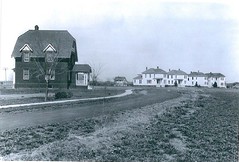
Marvin Bergman, who now occupies the old Sylwester house (Faculty Lane House 1) on North Columbia Avenue, kindly arranged for some old photographs in his possession to be scanned for this blog. One of the photographs was taken when Faculty Lane still was a dirt road.

Faculty Lane (Seward, Nebraska) as a Dirt Road

The image is uploaded to this Flickr webpage. Click ALL SIZES to see the image in larger sizes.

The house in the far background behind the four white houses is the Heinicke house on East Hillcrest, where Koe (Kathie) Heinicke (Steve Sylwester's wife) grew up.

The photograph was taken after 1924, when the four white houses were moved from Faculty Row to Faculty Lane. Can anyone provide any other clues to the photograph's date?


Tobin Beck wrote:

I remember when Faculty Lane, Hillcrest, the college half moon and Columbia in front of St. John’s were paved in the spring or summer of 1957. There were a lot of graders and other equipment going up and down the blocks so we couldn’t play outside as much as usual. I remember at one point running through the back yard and through the pine trees at the edge of our lot to take a look, and running right into the path of an earth mover coming toward me about 20 yards away. That was a little scary.

Wednesday, June 24, 2009

A Picture of Faculty Row

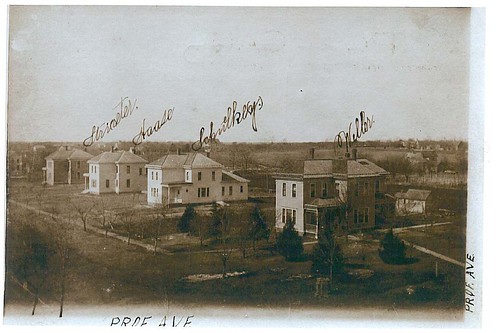
Marvin Bergman, who now occupies the old Sylwester house (Faculty Lane House 1) on North Columbia Avenue, kindly arranged for some old photographs in his possession to be scanned for this blog. One of the photographs shows the four old houses of Faculty Lane before those houses were moved to Faculty Lane.

Old Photograph of Faculty Row in Seward, Nebraska

On the photograph the four houses are annotated with the family names of their occupants -- (right to left) George Weller, Mr. Schuelke, Karl Haase and Fred Strieter. Annotations on the photograph's bottom and right margins say Prof. Ave.

I have uploaded this photograph to this Flickr webpage. If you click on ALL SIZES above the photograph on that webpage, you can see the image in larger sizes.

Fortuitously, Tobin Beck recently wrote an article for this blog in which he reported that these four houses originally had been located on a street that had been named Faculty Row. A key part of his article stated:

Originally the big white houses were built just northwest of Founders Hall, and ran in a straight line west from Miessler Hall. This was called Faculty Row, and there was a dirt lane running east-west between the houses and Founders. The college’s building expansion plans in the early 1920s called for the houses to be moved and a new street created.

Beck quoted from the May 21, 1924, issue of the Blue Valley Blade, which stated:

In order to carry out the proposed building plan, and furnish the desired site for the administration building the residences occupied by Professors Schuelke and Koenig, will be moved several blocks to the north and east.

Steve Sylwester explains this photograph as follows:

The distance between the Weller house and the Schuelke house in the above picture is MUCH greater than the distance between the Sylwester house and the Hackmann house on Faculty Lane.

Notice how the Weller house is configured in the above picture, which is different than how the house was configured on Faculty Lane. The front porch opens to what would be the east on Faculty Lane. When the house was on Faculty Lane, the front porch opened to the south. If the above picture was on Faculty Lane, the sidewalk from the front porch on the Weller house was headed toward the area where the new gymnasium was built, which back when was an empty field.

Toby Beck's article states that originally the big white houses were built just northwest of Founders Hall and ran in a straight line west from Miessler Hall. This was called Faculty Row, and there was a dirt lane running east-west between the houses and Founders. Therefore, the sidewalk coming from the middle of the Weller house and exiting the picture on the right side edge at the "V" in "PROF. AVE." is headed due east toward Miessler Hall.

I believe the large evergreen trees in front of the above Weller house are the outer trees that were removed from the cluster of large evergreens that once stood between Founders Hall, Miessler Hall, and Brommer Hall.

Furthermore, my very sure guess is that the above picture was taken from the roof of Founders Hall.

Toby, if you had not discovered the hidden history behind Faculty Row moving to Faculty Lane, the above picture would not have made sense. Thank you!

Photos of Houses Being Moved from Faculty Lane

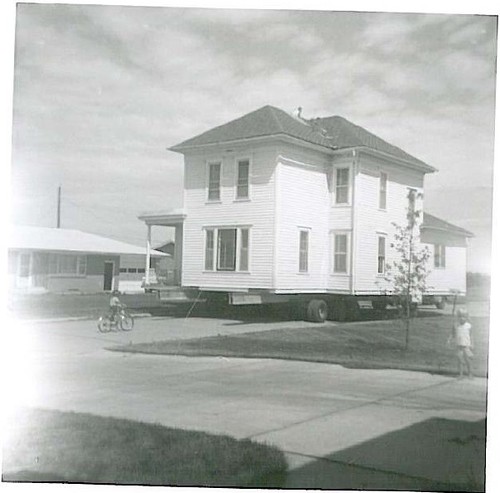
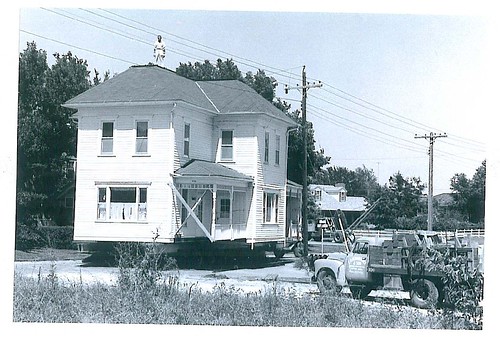
Marvin Bergman, who now occupies the old Sylwester house (Faculty Lane House 1) on North Columbia Avenue, kindly arranged for some old photographs in his possession to be scanned for this blog. Two of the photographs show houses being moved from Faculty Lane.

The first photo shows the Beck house (Faculty Lane House 4), which became the Klammer house, being moved on Plainview Drive. This photo has been uploaded to a Flickr webpage.

House Being Moved from Faculty Lane in Seward, Nebraska (2)


The photo below shows the Sylwester house. This photo too has been uploaded to a Flickr webpage.

House Being Moved from Faculty Lane in Seward, Nebraska (1)


On each Flickr page, you can click on the ALL SIZES click-point above the image to see the image in larger and smaller sizes.

Friday, June 19, 2009

How Faculty Lane Began

Tobin Beck wrote:

In my free time since the end of school I’ve been doing some research in the newspaper microfilm archives at the Seward library and found some interesting stuff about Faculty Lane.

Did you know that the Faculty Lane we remember was first laid out in 1924? Originally the big white houses were built just northwest of Founders Hall, and ran in a straight line west from Miessler Hall. This was called Faculty Row, and there was a dirt lane running east-west between the houses and Founders. The college’s building expansion plans in the early 1920s called for the houses to be moved and a new street created.

Here’s what the the May 21, 1924, edition of the Blue Valley Blade said about the dedication of the new men’s dormitory, Jesse Hall, and the plans for the campus:

The completion of the new $125,000 dormitory at the Lutheran College is the first move in the plan of adding many other splendid buildings to the group. The administration building [Weller Hall] will be commenced in September 1924, and be ready for occupancy in 1925. It will contain eight class rooms and many offices.

In order to carry out the proposed building plan, and furnish the desired site for the administration building the residences occupied by Professors Schuelke and Koenig, will be moved several blocks to the north and east.

The administration building will cost $150,000. The next building to be erected is the service building [Brommer Hall] which will be equipped with dining hall, kitchens, laundry, home for the steward, etc. This building will cost $150,000.

In order to make room for the new buildings, the play grounds west of the college will this summer be established on the ground east of the college.

A residence for Prof. H. Hardt will be erected this year on the college grounds east of Roy Schick’s residence [Tobin: Not sure yet exactly which house that was].

Some time in the future a gymnasium [Alumni Gym] will be erected. A collection of $700 was taken for this purpose at the dedication services Sunday.

In the years to come many more fine, modern buildings will be added to the semicircle planned. A curbed driveway, and landscaped grounds will eventually add attractiveness to the campus.

And here’s what the Seward Independent-Democrat had to say on Oct. 16, 1924, in a column headlined “Lutheran College Notes”:

The houses of Prof. Schuelke and Prof. Koenig that were moved during the summer, have been thoroughly renovated and decorated. Both families are enjoying the new location as well as the many conveniences installed.

The new house being built for Prof. Hardt is nearing completion and will be ready for occupancy by December first. The homes of Prof. Strieter and Prof. Haase will be moved next year.

The five houses will describe a semi-circle and when the new street and walks are laid out Faculty Lane will be one of the attractive parts of Seward.

In another part of the Independent-Democrat’s column on “Lutheran College Notes,” the newspaper mentions the strong Lutheran high school football team:

The Brainard eleven played the Lutheran high school last Friday afternoon on the college campus. The visiting team is new to football but showed pluck and perseverance. They were hopelessly outmatched by the local team, which accounted for the unusually high score [though the article doesn’t give the score]. However, a defeat may be a stepping stone to future victory.

Next Friday the Polk high will play here on the college grounds. An interesting game is expected.

After that, the Independent-Democrat has one more mention of Faculty Lane in the Lutheran College Notes:

Mrs. Wilhelmina Koenig, who has been visiting friends in Webster City, Iowa, the past two months, has returned to her home on Faculty Lane. She reports having had a fine time in spite of or because of her 86 years.

Tuesday, June 16, 2009

Pictures of the Sylwester House on Faculty Lane

Here are three old pictures that were found by Steve Sylwester and scanned by Liesel Sylwester. They show our house on Faculty Lane (Faculty Lane House 01) in mid-1964, shortly before the house was moved.

House at 276 Faculty Lane in Seward Nebraska, in 1964. The photo shows Steve Sylwester and Larry Sylwester as children. The image was scanned from a photograph that belongs to Steve Sylwester.

The above picture has been uploaded to this Flickr webpage. This shows Steve Sylwester sitting on the railing and probably Larry Sylwester standing on the stair.

House at 276 Faculty Lane in Seward Nebraska, in 1964. The image was scanned from a photograph that belongs to Steve Sylwester.

The above picture has been uploaded to this Flickr webpage. Printing on this picture records that the it was made in July 1964.

House at 276 Faculty Lane in Seward Nebraska, in 1964. The image was scanned from a photograph that belongs to Steve Sylwester.

The above picture has been uploaded to this Flickr webpage. The house's foundations have two rectangular holes that were made in order to pick up and move the house.

On each Flickr webpage you can click on the ALL SIZES click-point above the picture to see the picture in larger and smaller sizes.

Friday, June 12, 2009

Cross on Roof of House on Faculty Lane

A few days ago, I posted an old, aerial photograph that showed all the houses on Faculty Lane. Koe (Heinicke) Sylwester was looking at the photograph and noticed that the roof of the first house (Faculty Lane House 1), where our Sylwester family lived, was constructed so that it displayed a cross to anyone looking down.

House with cross on its roof on Faculty Lane in Seward, Nebraska. The image was scanned from an old photograph that belongs to Steve Sylwester.

It almost looks like the cross is drawn onto the photograph, but I think the cross really is part of the roof.

None of the other houses on Faculty Lane has a cross on its roof. You can see the neighboring house in the above photograph. All the other houses have similar, non-cross roofs.

Here is an aerial photograph of the house in its present location on North Columbia Avenue, and the cross still is seen clearly.

House with cross on roof on North Columbia Avenue in Seward, Nebraska. The image is taken from Wikimapia.

The house was built in 1895, which was eight years before the Wright brothers flew the first primitive airplane. Except for people who might fly over the house in a hot-air balloon, the cross would have been seen by no humans. So, the roof was made that way as a devotional sign to God.

Friday, May 1, 2009

Faculty Lane Kid Jenny Mueller is Provost

The Spring 2008 issue of the Broadcaster includes an article about Jenny Mueller Roebke, who grew up in Faculty Lane House 7 and who now is Concordia College's Provost. The article includes several photographs. The complete article and all the photographs are below:

Jenny Mueller Roebke. The image is from The Broadcaster magazine, http://www.cune.edu/resources/docs/Broadcaster/Broadcaster_Spring_2008.pdf

Growing up just across the street from Concordia ...

Home of the family of Walter Mueller on Faculty Lane in Seward, Nebraska. The image is from The Broadcaster magazine, http://www.cune.edu/resources/docs/Broadcaster/Broadcaster_Spring_2008.pdf

... campus life was the backdrop for Jenny Mueller-Roebke’s childhood. By the time she was a teenager, however, she had convinced herself she really didn’t want to stay in Seward, Nebraska.

It might be seen as evidence of God’s sense of humor that she has now spent most of her life in the town. What’s more, Provost Jenny Mueller-Roebke is now sitting in an office under the tower she used to look at from her childhood home. [The picture below shows young Jenny's brother Michael Mueller using his bicyle to pull her on a sled in front of Weller Hall.]

Jenny Mueller and her brother Michael Mueller sledding as children. Weller Hall is in the background. The image is from The Broadcaster magazine, http://www.cune.edu/resources/docs/Broadcaster/Broadcaster_Spring_2008.pdf

And, to top things off, her new role as chief academic officer is her dad’s old job. “Hah and double-hah,” saith the Lord. [The picture below shows Walter Mueller and his young daughter Jenny sitting in their front yard on Faculty Lane.]

Walter Mueller and Jenny Mueller. The image is from The Broadcaster magazine, http://www.cune.edu/resources/docs/Broadcaster/Broadcaster_Spring_2008.pdf

After earning a bachelor’s degree from Concordia, Mueller-Roebke taught in Milwaukee before returning to Seward to teach at the junior high school. She joined the faculty of Concordia in 1980, teaching English and then, eventually, freshman seminar and general studies courses as well.

Mueller-Roebke earned a master’s degree from Concordia in 1982 and a Ph.D. in curriculum and instruction from the University of Nebraska-Lincoln in 1990. By the mid-90s she was serving as chair of the Department of English, Communication and Theatre Arts.

“Some might say ‘what a narrow perspective you have since you have been in one place for provost so long, but being able to live the academic life in this place has been a wonderful experience for me,” said Mueller-Roebke. “I have been so blessed by the opportunities here.”

As she takes on the responsibilities of provost, Mueller-Roebke can look to her parents as role models. Her mother, Laura Mueller, was the first dean of women at the school, and it was her employment that brought the family to Seward. Her father, Dr. Walter E. Mueller, taught English in some of the same classrooms Jenny taught in recently. He also served as the academic dean, the position which is now titled "provost."

There are some things that are very, very different from when my father was sitting in this chair,” Mueller-Roebke said. “But one thing he did that I will strive to accomplish is to nurture people and enable them to do their jobs to the best of their ability. There was also a period where he did quite a bit of hiring of faculty as the university grew; those faculty members have been a part of educating students for 30-plus years now. As we face many retirements, I am aware of how the hiring of each professor shapes the future of an institution.”

Mueller-Roebke expects to rely on her experience as a faculty member to guide her decisions. “I can’t imagine attempting to be provost unless you had experienced the classroom and the nature of what faculty do. If there is anything that I can do to further opportunities for my colleagues here, I think it’s my time to give back.”

[Jenny Mueller Roebke's childhood memories are in a previous post in this blog. And here is a YouTube video of Provost Mueller Roebke giving a speech about how to be a college student.]

Thursday, April 16, 2009

Cary Stelmachowicz Remembers

Those Seward days were always the coolest memories of my [Cary's] youth. They certainly beat the scarier memories of junior high in the streets of Detroit.

Cary Stelmachowicz. The picture was scanned from the fourth-grade pages of the 1965-1966 annual of St John Elementary School in Seward, Nebraska.

By the way the Stelmachowicz clan numbers five kids (my youngest sister Corrie was born when we moved to Detroit). Four of us would remember many of the stories told in this Seward Faculty Kids Nostalgia Ride. Sisters Candy and Cheryl probably more than I.

I loved the Sylwester family cause they had almost all boys and supplied me with the brothers I never had. The nonstop baseball games (I remember the bat with the nail in it Steve!) in the backyard were what I lived for -- then there was the golf, football, army games, baseball card collecting, riding our bikes around the CTC campus, trips to Hand grocery store, Plum Creek, walking on some railroad track. School is hardly in my memory banks, but all the days in the back yards are -- especially after the BIG MOVE.

I do have some memories of Faculty Lane -- running through the DDT, my sisters putting on endless plays in the garage. The Hackmans and Becks I sort of remember, and the Schwicks -- Robbie was my age, I believe. We use to run against each other in track meets -- the big St. John's meet.

I've always credited Werner Klammer for getting me started loving the game of golf -- he was always out back hitting golf balls.

Nobody has talked abouot catching grasshoppers and mutilating them every which way -- maybe that was just Larry and me. Hey, we were younger and didn't understand we might be contributing to global warming.

Is Tricia still with us???? She was in my class I think.

(Mike Sylwester:) Tricia always has had a major crush on you, Cary. She has her computer programed to Google for your name and images once a week.

I'm getting sisters Candy and Cheryl in on these -- they will add the female perspective and then some.

Jim Hardt teaches and lives nearby -- I play golf with him once or twice a year.

Seward was indeed an Idyllic place to grow up. I tried to create the same atmosphere for my kids here. That is why we live in a small town, Fredonia WI on aboout a 2 acre lot.

Candy says a reuninon should be in the works -- interesting idea.

I could go on and on -- but will stop for now. Keep the stories rolling, and for your reading pleasure check out a poem called "Fern Hill" by Dylan Thomas. I think he wrote it thinking about our days in Seward.

Saturday, April 11, 2009

Saving Bricks From the Old Basements

In the summer of 1964, after the four houses were removed from Faculty Lane, only the basesments remained. The basement walls were made of brick, and the process of moving the homes had loosed many of these bricks from the basement walls.

I decided to save some of these bricks. I loosened the mortar and dirt off the bricks, and started to pile them up on the ground near the basement. Then I got the idea that I might be able to make a lot of money by selling these bricks. I was only 12 years old and wanted to earn some money, and I had a lot of time, since it was summer vacation. I obtained some hammers and a crowbar and began to systematically remove, clean and pile up all the bricks I could.

All that time, I fantasized about all the money I eventually would earn by selling these bricks. I worked on this project several hours a day for a few weeks. Some friends helped me occasionally, and I promised to share some of my future wealth with them.

During that summer, our family lived in an empty dormitory across the street from the Marxhausens' home. I could ride my bike quickly over to Faculty Lane and work on my brick-saving project. Late in the summer, though, we moved into our house in its new location out in the country. After we moved, I was busy with settling in, and so I did not work on my brick project every day.

One day I returned to Faculty Lane and I discovered to my horror that much of the debris in and around the basements had been picked up and hauled away. Practically all my bricks had disappeared! I had cleaned and piled up several hundred bricks, and only a couple dozen remained.

I told my Dad and hoped he could do something about it, but of course he could do nothing. He did, however, put all the remaining bricks into the back of our station wagon and transport them to our new location. There he eventually used my bricks to make a patio behind our house. I vaguely recall that Dad paid me something for my bricks, something like $10.


Dan Schwich remembers: "Here's one of my weirdest memories of Faculty lane. In the summer of 1964 when we moved back to Seward from southern California., they had just moved the four white houses to make way for the Music Bldg. All that was left of the four houses were the basements. But we could go down into the basement of our house (what our family has always called the Roselle house) and see Lavonne Reimer's carpentrywork. And it was amazing how small the basements seems for what had seems like enormous houses."

The Relocation of Houses in 1964

[The following was written by Robert Sylwester.]

In 1964 Concordia decided to build the new Music Building on the site of the three east Faculty Lane homes (Sylwester, Klammer, Stelmachowicz). This would have meant that the three families (of 7, 4, and 3 children) would have had to move into large faculty homes elsewhere -- and none of appropriate size were available.

Tom Langevin was Concordia's president, and Werner Klammer was sufficiently imaginative to suggest to us and Tom that if Concordia would give us the houses, we would move them to a five acre lot about a half mile north on Columbia that the three families would purchase. Concordia would thus not have to pay to demolish the houses, and it would also solve the thorny problem of relocating the three families.

Werner Klammer was the key to our 1964 move from Faculty Lane to Columbia Avenue. Neither Mike Stelmachowicz nor I had the imagination and practical smarts to negotiate the move of the three houses with Concordia, the property owner, the city, the movers, the builders, and whoever else was involved. It was Werner all the way, and Mike and I just went along with whatever he suggested.

President Tom Langevin was also instrumental in expediting the complexities -- and probably breathed a huge sigh of relief that Concordia no longer had to provide housing for three large faculty families. In retrospect, it was a wonderful beautifully orchestrated idea that has left an enduring historical community legacy, and it sparked the fine housing development that occurred north of the 1960's Seward.

When local builders determined that the houses were still in excellent condition (2X6 studs that ran from the base through the second floor) and could be moved without damage to the houses and streets, we settled on paying Concordia $200 for each of the houses (because the college couldn't legally give them away). We divided the 5 acres into three lots of 1.5+ acres plus a street easement -- and a street now separates the former Sylwester/Stelmachowicz houses.

This project wouldn't have been possible without Werner Klammer's knowledge of building, and his wheeler/dealer skills. Neither Mike Stelmachowicz or I would have been able to do all the background work with Concordia, the city, and the owner of the land to pull off what was a very good deal for everyone involved.

Our late 19th Century house (we think 1896) had historic status. It was known simply as The House At The End Of The Lane. It had been the home of Concordia's first president, and later the long time residence of Concordia's most famous and beloved professor, Henry Koenig (a bachelor). We thus decided to renovate it as an historical site. We fortuitously discovered the original plans for the house in Concordia's archives, and hired a Lincoln architect who specialized in renovations to return the house to its original plan. It had been frequently (and inappropriately) remodeled over the years. Our house was placed in the middle of the three houses, and the architect turned it sideways (the kitchen and entry facing Columbia) to increase its visibility, and the general attractiveness of the project. The entire project cost us about $25,000.

When we moved to Eugene, Oregon, we sold our home to the family of Concordia prof Bill Heinicke, and they later sold it to the family of Marvin and Shirley Bergman (two Concordia profs), who continue to live in it -- and absolutely love it. They have maintained its historical integrity, and it's always the star of any local charity tour of decorated homes. The house is now about 113 years old and still in good structural shape. The Bergmans have also developed a large beautiful yard that built on what we began -- and have not sold off any of the 1.5 acre lot (as have the owners of the other two houses). The trees we planted are still there, as are the vegetable garden plots we established. The back of the house facing the beautiful garden/orchard area has a lot of grass.

We feel that we three families did a wonderful thing for Concordia and the community by moving the houses out to an area that was simply farmland at the time. What we did by this was to spark a later housing development in that area, and since our houses were so striking in their development, the area is now an upscale housing area.

Whenever Seward has some kind of parade of homes to raise money for something, they now always include our house in it, and it's the biggest draw. At Christmas last year, 500 people toured the house.

So we left a nice little bit of ourselves in Seward and Concordia when we moved to Eugene and the University of Oregon.

Friday, April 10, 2009

Steve Sylwester Remembers -- Sports

I [Steve] remember:

Playing tackle football on the campus lawn between Link Library and the single tennis court across the street from the Becks and the Schwichs. I remember this because I broke my collarbone while playing. I had to wear a vest cast for a long time, but I still continued to play sports until the doctor finally very sternly warned me that he would have to repair my broken collarbone surgically if I did not allow it to heal.

CTC football and baseball practices on East Field. I spent endless afternoons watching CTC [Concordia Teachers College] sports practices. The football coaches finally let me shag punts for the punter to help, and I became quite good at catching punts as a result. The benefit of watching baseball practices was that occasionally you were rewarded with a broken bat. Of course, this was in the era of wooden bats at all levels of play. A CTC broken bat that was merely badly cracked could be nailed and screwed and glued and taped back into use as a prized sandlot bat.

Those CTC baseball bats that we taped were bats that you had to grow into. When we moved from Seward after my 8th grade year, I still had not grown into most of the bats I had squirreled away in the corner of our garage. I had a pretty good arsenal. Even choking up on some of those bats with skinny handles and big barrels was not enough.


After Plainview and Fairlane filled up with houses, the kids on those blocks created a baseball field and football field as needed in the open field that separated the backyards between those two streets at that time. Sometimes our neighborhood played their neighborhood, and sometimes we just picked teams from those who showed up to play — and everyone got to play.


If I carry any want-to-cry sad laments into today from those days, it is that I NEVER see sandlot games of any sort played by kids anywhere in Eugene, Oregon, where I live. Everything is organized with coaches, and all of the games have a multitude of parents watching and rooting for their children. No parents ever watched our sandlot games. Sometimes I see adults playing sandlot ball, but I NEVER see kids playing anything but organized play — even all of the practices are organized under the supervision of adult coaches. The kids today have no concept of even the simple skill of negotiating ground rules for a game based on how many people have showed up to play, and they have no experience self-officiating. It is easy to imagine that some kids would not know what to do if there was no adult present to umpire or referee a game.


Of course, there were the Concordia Raiders cheers:

(The Tarzan Cheer)

Uh! Ungawa! The Raiders got the Powah!

Uh! Ungawa! The Raiders got the Powah!

Give me a C and a Raiders and a cha-cha-cha
Give me an O and a Raiders and a cha-cha-cha
Give me an N and a Raiders and a cha-cha-cha
Give me a C and a Raiders and a cha-cha-cha
Give me an O and a Raiders and a cha-cha-cha
Give me an R and a Raiders and a cha-cha-cha
Give me a D and a Raiders and a cha-cha-cha
Give me an I and a Raiders and a cha-cha-cha
Give me an A and a Raiders and a cha-cha-cha
What's that spell? CONCORDIA!

Go! Fight! Win!
Romp! Mangle! Disembowel!

(I cannot imagine that that was an approved cheer, but we yelled it)

(The Song Cheer)

On Concordia, On Concordia
Pep that team of yours
Fight Concordia, Fight Concordia
Til we win the game
Rah! Rah! Rah!


Even today, after an excellent athletic play has just occurred in a sports game I am watching, I will sometimes blurt out:

Way to go, Russy baby!

With enthusiasm! That response was first yelled in the playing field between Plainview and Fairlane in response to an excellent play done by Russ Meinke, who is three years younger than me (Joel Klammer's age) and four years younger than his older brother Lance.

The great thing about the Faculty Lane sports ethic that infiltrated into all of the playing fields in the nearby neighborhoods was that the older kids actually worked hard to include the younger kids in the games, and endured with both patience and honest enthusiasm the learning of sports skills by the younger kids. There was always a moment of sincere, enthusiastic praise when a younger player made a good play.

For some unconscious reason that I cannot pinpoint any specific event to, I credit Jody for that constant inclusion of younger players. If someone else either deserves or shares credit for that Faculty Lane sports ethic, please identify that wonderful person so he/she can be rightly praised. Jody (and whomever) deserve(s) a standing ovation!

Sledding

Toby Beck wrote:

I remember as a little kid Dad would take Tedi and me sledding in the street down the hill on the east end of Faculty Lane (Kevin was too little). We’d take turns. Dad would sit at the back of the sled and Tedi or I would sit in front of him. He’d steer with his feet as we went down the hill. We’d have a great time. That was a great hill for sledding when it got snowy and icy (but probably dangerous for driving – although I don’t remember there ever being traffic down the Faculty Lane hill to Brommer Drive on snowy days – except one time when the Middendorfs’ car got stuck there).

When I was older and we lived on Plainview, I’d go sledding on the east side of East Field – and narrowly avoided a serious injury when I was a sophomore in high school. Several of us were playing a game called “crash car” where we’d try to push each other off the sleds as we were sliding down the hill. I was going down head first and as the rider ahead of me hit the bottom of the hill, his sled runner came up. I’ll spare you the details, but I couldn’t swallow for several days. Strange what you remember. It was Sunday, Nov. 10, 1968, because I recall as I walked back into the house Dad had the Bears-San Francisco game on TV and Gayle Sayers had just suffered a major knee injury.

Jody Schwich wrote:

In the winter, we sledded down Faculty Lane from in front of Hackman’s, past Griesse’s (and then Sylwester’s) to that street in front of the new gym (I’ve forgotten its name).

Steve Sylwester wrote:

It is odd in retrospect that we did not go sledding down the east side of East Field after winter snows, except maybe once (and I have to push hard for that "maybe" memory). I just asked Koe [Heinicke] about it, and she and her family did go sledding there regularly.

Michael Mueller pulling Jenny Mueller in a sled in front of Weller Hall.

Jenny Mueller and her brother Michael Mueller sledding as children. Weller Hall is in the background. The image is from The Broadcaster magazine, http://www.cune.edu/resources/docs/Broadcaster/Broadcaster_Spring_2008.pdf

Jenny Mueller Remembers

My [Jenny's] world, the area that I was allowed to roam freely, included the areas bordered by Columbia Avenue on the west, College Avenue on the south, Plum Creek on the east, and Schlueter’s farm and Hillcrest on the north. We could, with permission (which consisted of just telling an adult where we were headed) go beyond these borders, and hung out regularly on the playground and in the “draw” behind St. John school (the church wasn’t there yet).

We rode bikes and played hide and seek or army all over the campus, hit the candy machines in the snack bar in the basement of Founders on a regular schedule (for me, that was right after I got my allowance of 5 cents for church, 5 cents for savings, and 5 cents for spending—my nickel for spending went immediately into the vending machine in the snack bar every week), and hid out in the Weller fire escapes.

Two memorable Weller fire escape activities were smoking cigarettes swiped from our dad’s supplies and starting fires in paper cups. I remember how brave I thought Jody Schwich was for stomping out an out-of-control paper cup fire with only her light tennis shoes to protect her feet.

We also played drop the headband from the top of the fire escapes. In this game, one person would be at the top of the fire escape and would drop one of the plastic, sharp-toothed headbands we used to wear out of the fire escape to the sidewalk below. The other person would be waiting below with her eyes closed and the person above would guide the “blind” person to the headband via oral directions. I’m not sure what was so amusing about that game, but we seemed to find it entertaining. We also climbed over the iron railings on the fire escapes and would demonstrate our bravery by hanging on with only one hand. Only a person familiar with those fire escapes could appreciate how really stupid that was—given how high those fire escapes are, how small we were, and how hard the concrete below is, this strikes me today as one of the dumbest things we did as children, but probably far from the dumbest or most dangerous.

At the end of the academic year, we would rummage through the garbage cans around the college women’s dorms—Strieter and Schuelke and the old white houses that used to house college co-eds. We would find unbelievable treasures that we would cart home: bottles of nail polish with usable polish still in them, lipsticks and rouges (there was no “blush” then), and delightful perfumes. Once I found a bottle of Evening in Paris that was still at least a fourth full! Sometimes we would roam as far as the maintenance junk yard located about where the tennis courts behind Timothy and Philip are now, or all the way to Schlueter’s far pasture.

Jody Schwich Remembers

I [Jody] know that Plum Creek was beyond our roaming territory in 1956-60. The CTC campus, the houses on Columbia where Meyers and Juergensons lived, and the St. John’s playground were about as far as we could go.

Like Jenny [Mueller], I remember spending my nickel allowance in the vending machines in the basement of Founders Hall. Husker pop cost a dime and that was usually more than any of us had. We did salvage Husker pop bottles from under the football grandstands and turn them in for deposit money.

I remember the April night in 1957 when a tornado almost flattened Milford. Around that same time our cocker spaniel Sandy ran away—and I think we got Con-Te-Co the bulldog (Mom called him Pookie) after that. Not long before she ran away, Sandy had puppies. Around that time my brother Bill was lifting my brother Danny up to look in the incinerator in the backyard near Hillcrest when he slipped. Danny was fairly badly burned and spent time recuperating in the house with the new puppies.

When I was 6 in 1956, I used to throw a tennis ball up against the side of the “Hackman house” where we lived and catch it with my baseball glove. Paul Rosel (the music professor who lived next door) noticed that I (the baseball coach’s daughter) was throwing off the wrong foot. He corrected that and should receive partial credit for the fact that 14 years later I was an All-American softball player with the Utah Shamrocks.

I remember seeing a dishwasher for the first time in Rosel’s house when they lived next door to us (probably in 1957). I remember watching the Kennedy-Nixon debate on TV in the Rosel house in 1960. In all those Faculty Lane years we only watched CBS-TV (which came from Lincoln) because we couldn’t get the Omaha stations. I remember seeing a blender for the first time when Carol Beck used it to make chocolate milk shakes at a picnic in their backyard.

Eddie Hackman and I were the oldest kids in the four big white houses. We had a “secret place” in the big tree that was in their yard behind the garage that the Hackmans and Schwichs shared. None of the younger kids could get up there because they were too short. Dennis Langevin who lived on the corner of Hillcrest and Plainview (where we later lived with Lavonne Riemer) and who was also in our class at St. John’s would sometimes try to come over and play with us, but I recall that Eddie and I were sometimes mean to him.

The Schwichs had so go inside when the street lights (those pretty classic ones) came on—so play for everyone pretty much ended then. I remember fun summer evenings of “kick the can” and catching lightning bugs when we did get to stay out after dark—usually because the adults were also outside. (Did we barbeque? I don’t remember.)

I remember when they paved Faculty Lane. It must have been about 1957 or 1958. I also remember running through the spray when the mosquito tractor ran down the street in the summertime. That was DDT, wasn’t it?

Shortly after we moved to Faculty Lane, my baby brother Rob had a hernia operation. He caught an infection in the hospital and almost died. I remember praying for him with my head down on my desk in Miss Grotelueschen’s first grade classroom.

After we moved to the Rosel house, Lavonne Riemer spent several summers with us when Dad was gone to Salt Lake City working on his doctorate. Lavonne built all kinds of cool things, including a storage lean-to on our side of the garage and a covered sand box. Billy and I used to play make-believe Major League Baseball games with our baseball cards in the sand (Mickey Mantle, Willie Mays, Hank Aaron, Ted Williams, Warren Spaun, and my favorite, Eddie Matthews). We were Milwaukee Braves fans because Lavonne (who lived in Wisconsin) brought us Braves caps and shirts.

Our Rosel backyard did have at least one plum and one apple tree (and maybe a pear tree)—and I think we did have some grapes and a garden. But there was still plenty of room to play baseball. We also played baseball on the “new” tennis courts (where the science building was later built).

One spring or summer I remember that Dad taught a folk dancing class on the double tennis courts. I guess that kind of dancing was OK!

I remember when our whole family would take shopping trips to Lincoln—usually about once a month to buy clothes and shoes at Gold’s and Miller and Paine and to redeem S&H Green Stamps. If it was a Cornhusker football Saturday, students on street corners would hand out red and white feathers with an “N” (for Nebraska).

In the fall of 1957, I rode on a Homecoming float. I think I was dressed as an Indian. That afternoon I got sick and was rushed to the hospital for an appendectomy. That must have been the same fall when Susan Wilbert died.

I remember when Charles Starkweather and his girlfriend went on their scary, murder spree and when there was a shooting in Jesse Hall—both in 1958, I think. Then I remember when Starkweather went to the electric chair. About that same time I remember Mom’s reading Charlotte’s Web to us; it was running in installations in the Omaha World Herald.

As Steve [Sylwester] mentioned, we didn’t have anything to do with the “public-schoolers.” But we all remember, I’m sure, using the Seward High School gym for CTC basketball games and for the big St. John’s Lutheran Church Christmas program (and getting a bag of candy and peanuts afterwards).

I remember that Tommy Zimmerman had all this cool army gear. We would sometimes play in their basement—which you entered through some kind of a metal, slanting cellar door.

In the winter, we sledded down Faculty Lane from in front of Hackman’s, past Griesse’s (and then Sylwester’s) to that street in front of the new gym (I’ve forgotten its name).

After the new gym was built, we had fun faculty swim nights in the new pool.

Somebody earlier remembered that we used to look for treasure when the CTC students moved out in the spring. I remember that Lois Meyer had a huge collection of salvaged jewelry and perfume in her upstairs closet that we used to play with. We also used to read MAD magazine at the Meyers. I think Alan had a subscription.

Faculty Kids

The large houses along Faculty Lane and Columbia Avenue were occupied by families whose fathers served on the faculty of Concordia College for the Lutheran Church (Missouri Synod). Faculty members had an option to receive free housing, which was allocated according to need, and so faculty members with large families were allocated large houses. Since these houses all belonged to the college and were large, the happy result was that a large number of children lived along those two streets. I would estimate that the average family had about four children and that about sixty children lived along Faculty Lane and Columbia Avenue.

We all knew all these families very well. I knew what all the fathers taught and where their offices were located on the campus. Practically all the mothers were housewives who stayed home, and I was inside all these homes and knew the mothers and all the brothers and sisters. I even slept overnight in many of the homes.

All these children attended St. John’s Elementary School and then attended Concordia High School, which was located on the campus. Many of the children then stayed and attended Concordia College. Since all the fathers and a few of the mothers taught in these schools, we children eventually knew many of the other parents as our own teachers.


St John’s school had two kinds of kids – faculty kids and non-faculty kids. All of us who lived on Faculty Lane and Columbia Avenue were faculty kids. We had a common lifestyle and similar families. The non-faculty kids had parents who worked in stores, on farms, in the town’s factory and other such miscellaneous businesses.

Some non-faculty kids had parents who worked at the college in non-academic positions. For example, cowgirl Jane Schlueter’s father managed the college’s facilities staff, which maintained the buildings. Steve Roetcher’s father managed the college store. Sue (last name?)’s father managed the college cafeteria, and Roy (last name?)’s mother was the head cook. I knew most of those parents too and sometimes had contacts with them on campus. I did not consider those kids to be faculty kids, however.

Each summer a couple of faculty picnics took place on the campus lawns across Faculty Lane from our houses. I think a lot of food was provided free by the college cafeteria, and the adults got to drink beer, so these picnics were well attended.

One occasional kids’ activity of these picnics was a crabapple fight. Directly across from our house there was a tennis court surrounded by a lot of crabapple trees. Crabapples are like large, hard cherries. After the picnics, we faculty kids would pull handfuls of these crabapples from

The fruit of a crabapple tree. The photo was taken from http://rainbowssunshine.blogspot.com/2007/04/edible-berries-of-northern-canada.html

the trees and throw them at each other and then stomp on the crabapples on the ground. We made a huge mess. It was really a bratty thing for us faculty kids to do. (A couple years after we moved in, these tennis courts were expanded, and so all these crabapple trees were removed.)

A crabapple tree. The photo is from https://tplcsomething.wikispaces.com/Justus%27+Page?f=print

Faculty kids were allowed to attend college events for free. These events included sports games, plays, concerts, and so forth. When we passed by the cashier who was collecting admittance fees, we would say “faculty kid” and walk in without paying.

After graduation from eighth grade at St. John Elementary School, all of the faculty kids went on to attend Concordia High School, but most of the non-faculty kids went on to attend Seward’s public high school. About the only occasions when we faculty kids ever associated with public-school kids was in Pony League baseball teams and at the town’s swimming pool during the summers.

I knew a couple public-school kids also because I had a paper route. I met them at sales meetings or when I was paying my monthly collections to the town’s distributor. If I was delivering papers and saw one of those other kids, we sometimes would stop to chat. If, for example, I had a newspaper that was messed up and the other guy had an extra newspaper that was in good shape, then the other guy would give me his extra, good newspaper.


[Steve Sylwester wrote:]

Quite possibly, Koe [Heinicke; Steve's wife] is a stranger to some of you. Because her father then worked at Jones Bank, she was not a Faculty Brat. Though she lived just across the street from the CTC gymnasium and swimming pool, she did not have the same free-use privileges we Faculty Brats enjoyed — and she does not remember that fact with fondness.

Her best friend during childhood was "Faculty Brat" Ronda Kirch, who lived on Hillcrest across the street from the Byes (remember Kevin Bye: his dinosaur collection, his family's chickens, and Kevin's incessant saxophone practicing). Koe sometimes went swimming at CTC pool with Ronda, and also sometimes went to Link Library with her, but she was always plainly aware that she was not "Faculty."

Koe's grandfather Iddo Heinicke, Sr. was the pastor of Saint John Church in Seward for many years before he died in a tragic accident. In fact, he officiated when my Uncle Roland Sylwester married Verna Bickel (daughter of CTC Professor Bickel) in Seward approximately 60 years ago. Koe's father was a long-time executive with The Lutheran Church Extension Fund after leaving Jones Bank, and served on the Board of Regents at Concordia Seward for a long while. I share that information regarding Koe's family to establish that the non-"Faculty" population in Seward was not necessarily defined by Hughes Brothers employees and non-Lutherans.

Faculty Lane was an ultra-closed community (CTC) within a closed community (St.John Lutherans) within Seward. You might recall that very few public school kids lived on our side of town — almost none. In a usual case within the United States, parochial school kids are strangers in their own neighborhoods, sometimes complete social outcasts. That all of our neighbors for blocks and blocks around were our St. John School classmates is just unheard of anywhere.


[Mike wrote:]

I don't remember that the expression "faculty brat" being used much. I remember hearing it from some college kids occasionally, but I just thought they were trying to be funny.

The proper expression was "faculty kid."

Mike Sylwester Remembers the Beck Family

Faculty Lane House 4 was occupied by the Beck family. Mr. Beck taught music. None of the Beck kids were in my class. The oldest boy, Toby, was in the class behind me.

Toby Beck, seventh-grade student at St John Elementary School in Seward, Nebraska

I remember that my brother Steve and I stayed overnight in the Becks' house our first night in Seward, because our room was not ready yet in our new house. I liked the name Toby, because there was a children's book about a boy named Toby who ran away to join a circus.

Toby had a lot of toy trucks. I think he collected them. He always asked for and received more toy trucks on his birthday, Christmas, etc. In general, I thought that playing with toy trucks was rather lame, but his trucks were really cool, because they were Tonkas.

Toby also collected records. Maybe because his dad taught music, he was one of the first kids in the neighborhood to have his own record player and his own records. At that time, he was interested mostly in military songs. He had one record of Army songs, one record of Navy songs and one record of Air Force songs. When I visited his house, we would listen to these same three records over and over.

[Army song]
Peas, peas, peas, peas, eating goober peas!
Nothing’s so delicious as eating goober peas!!!

[Navy song]
From the Halls of Montezuma to the shores of Tripoli,
We fight our county’s battles in the air, on land and sea!

[Air Force song]
Off we go, into the wild, blue yonder,
Climbing high, into the sun!
Here they come, zooming to meet our thunder!!
At’ ‘em boys, give ‘er the gun!!!
Down we dive, spouting our flame from under,
Off, with one heckuva roar!!!!
We live in fame or go down in flame,
Hey, nothing’ll stop the US Air Force!!!!

Toby inspired me with the dream that I too might be able to own and play my own records in my own home. We had a record player in our home, but we never had played any records on it. Rather, we used it only as a piece of furniture onto and into which my Mom put a lot of knick-knacks.

Since I had a paper route, I had some spending money, so one day I went to the House of Davidsons (an odd, local retail store) and bought a couple of Smothers Brothers albums and brought them home. My Mom cleaned up our record player, and from then on our family too was able to play records in our home.

My initial idea was that I would just keep buying Smother Brothers records. Why would anybody buy anything else. Then, however, I discovered Bill Cosby records, so I bought some of those too. Then I got interested in folk music -- Limelighters, Kingston Trio and Peter, Paul and Mary and then Triny Lopez.

My musical tastes were very uncool. Toby's tastes were much more advanced. He bought the first Beachboys album on the block. I was skeptical, but Eddie Hackmann praised it, and so I gave it a second listen, and then it blew me away. I missed the Beatles Revolution completely, but thanks to Toby, I can say I was hip to the Beachboys during that period.

A response from Toby Beck:

I remember the toy trucks – I might even still have them! That was fun – we made roads by the big tree on the east edge of your front yard. One night we had I think every kid on the block around that tree with a truck or car.

I also remember the circus that we did one year on your porch – and the weekly Monopoly and Risk games.

I’d forgotten about Goober Peas, but we’ve still got that record. Haven’t played it in decades though.

Mike Sylwester Remembers the Schwich Family

Faculty Lane’s House 3 was occupied by the Schwich family when we moved in. The father, Lou, managed the college’s physical education department and athletic program, and the mother Mildred taught literature classes part-time at St. John elementary school. The entire family was very athletic. The oldest child was a girl, Jody, but she was a tomboy who played sports competitively with boys. The second child, Bill, was my age, and then there were several younger boys.

I met Bill on my very first day in Seward. My brother Steve and I had slept in the Becks home on our first night. On the next morning, Steve and Toby were doing something together, so I went outside to explore my new neighborhood, and Bill came up to me and introduced himself.

Bill was riding a Schwinn bicycle that had a gear shift. I was amazed that a boy my own age had and was able to ride such a modern machine. I, being freshly arrived from the remote country and a one-room school, had never even had the idea that I might own and ride a bicycle. (Instead, I always had fantasized about owning and riding a pony.)

Bill was my age, and he began to teach me how to play baseball and showed me around the neighborhood. With his sports knowledge and bicycle skills, Bill Schick was the coolest boy I could imagine.

On that first day of our meeting, Bill took me to see the Schlueter’s home, which was located behind the far home on Faculty Lane. That home was fantastic, because the Schlueter family raised horses and ponies in the area right behind their home. Bill introduced me to Jane Schlueter, who was our age and who rode the ponies a cowgirl. She also could draw pictures of horses surprisingly well. She was the coolest girl I could imagine. Indeed, I had moved into the coolest neighborhood with the coolest kids in the entire world!

During the following weeks and months, Bill introduced me to sports. I learned how to play baseball, football and basketball at his house. I rode bicycles across town with him to join the Pony League baseball teams. Our neighborhood in Seward was a great place for boys to play sports. We had big back yards, open fields, the athletic building (which Mr. Schwich would open for us) and the college athletic fields.


As I remember, the Schwich parents prohibited their kids from playing War. I thought this prohibition was odd. How could such an athletic family be against playing War?

Another odd rule that the Schwich family had was that when their kids attended sport events at the college, they had to sit in the bleachers and watch the game from beginning to end. All the rest of the kids from other families ran around the area and played under the bleachers and paid less than full attention to the games. The poor Schwich kids!


I was a close neighbor of the Schwich family for only one year. In the summer of 1961, they moved to California. I was heartbroken when Bill left.

While they were away, Gene Meyer kept me informed about the Schwich family's adventures, because the Meyer and Schwich family kept in contact. I heard that my friend Bill Schwich was the top Little League baseball star of the entire state of California. Bill was famous for diving onto gravel in order to catch line-drive foul balls. Nobody in California ever had seen another young baseball player perform such feats as this Nebrasks kid!

Then in 1964 we all heard that a miracle was happening! The Schwichs were moving back to Seward!!

There were some kids who had moved to Seward after the Schwichs had moved away, and I told these new kids all about the Schwichs. We found out which house the Schwichs were going to move into and the approximate date of their arrival, and then, beginning a couple days before that date, we went and hung around the house all day waiting for the Schwich car to drive up. As the days passed, however, the car did not arrive, and the other kids I had recruited gradually abandoned this vigil. Eventually even I myself stopped hanging around the house, and finally the Scwichs did arrive without fanfare about a week after the foretold date.
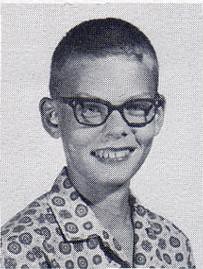
Bill Schwich, eighth-grade student at St John Elementary School in Seward, Nebraska

After Bill returned, I still tried to follow him around like a puppy dog, but it never was the same as when I lived two houses away.

I left Seward after my sophomore year of high school, and for the following several years I had recurring dreams with variations of a situation where I was supposed to meet Bill Schwich again, and then the meeting was cancelled at the very last minute. Eventually, I wrote Bill a letter and told him about these dreams, and he sent me a very nice letter, and then these dreams stopped.

(Since I'm on the subject of recurring dreams, I will mention here that I also had a recurring dream for many years about the Christmas pagent that we had every year in a basketball court (at Seward high school?). In this dream, the entire basketball court turned upside down during the Christmas pagent, so that we all were hanging upside down from the top of the building and were about to fall down. At this point, I would wake up from this dream. I never understood why I kept having this dream or what it was supposed to mean.)


Recently my brother Andy sent around a like to a funny advertisement for a gadget called a Wunder Boner, which is used to remove the bones from fish. This advertisement reminded me about a funny incident, and I responded with a message about that incident, which involves Mildred Schwich:

This advertisement about the Wunder Boner that occurred when when I was attending eighth grade at St. John's in Seward. Mrs. Schwich was teaching a literature class, and each student in turn had to stand in front of the class and read a book report he had written.

Steve Rathje, was reading his report
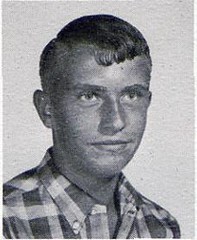
Steve Rathje, eighth-grade student at St John Elementary School in Seward, Nebraska

about some book that had been written by someone named Dr. Bonner. Rathje mispronounced the name as Dr. Boner and was totally oblivious to his mistake. His book report named Dr. Bonner about ten times, and each time the student mispronounced it as Dr. Boner.

Of course, as Rathje continued to read his report, all the rest of us male students found it more and more difficult to suppress our laughter. Rathje (and most of the female students) continued to be oblivious, which made each new mispronunciation of the name even more hilarious. We guys all were just dying from our efforts to keep from laughing out loud. This is the funniest word in the world for an eighth-grade boy.

Mrs. Schwich could not help smiling, but she basically kept her cool. After the book report had been read, Mrs. Schwich commented favorably on Rathje's presentation but made sure to pronounce the name a couple times distinctly as Dr. Bonner, without pointing out Rathje's mispronuciation. She and Lou probably had a good laugh about that book report when she got home after school that day.

(Since I'm on the subject of snickering about naughty thoughts in class, I will share this memory too. At St. John's we had a devotion a couple times a day. A class member would select a hymn that we all would sing, and then that class member would read a Bible passage and lead the class in prayer. Anyway, our hymnal had one hymn that had words something like "I was naked, and you clothed me." When we got to that line of the hymn, everyone in the class had to stiffle the urge to laugh. I think that there were a couple kids in the class that deliberately chose that hymn for that reason when it was there turn to lead the devotion. So, if we snickered at that line in that hymn, you can imagine how much we wanted to laugh at Rathje's book report about Doctor Boner.)
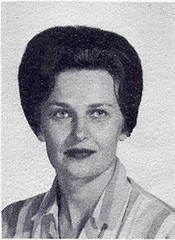
Mildred Schwich, upper-grade teacher at St John Elementary School in Seward, Nebraska

Mrs. Schwich was an excellent teacher. I remember her instruction very well. Under her instruction we read The Autobiography of Benjamin Franklin, Vance Packard's book The Hidden Persuaders and a book about animal instincts. One book that she read to the class (we ourselves did not read it; we listened to her read it) was Charlotte's Web. All we kids cried when Mrs. Schwich got to the part where Charlotte died.
Mike Sylwester Remembers the Hackmann Family

Faculty Lane’s second house, the one next to ours, was occupied by the Hackmann family at first. The father taught theology.

I remember only the two oldest boys -- David and Eddie. Neither was in my class. I think David was in the class above me, and Eddie was in the next class up. There were a bunch of younger siblings in the family, but I was already eight years old, so I was interested in playing only with the cool, older kids, not with the immature younger ones.

Children of the Sylwester and Hackmann families posing in a line in a yard on Faculty Lane in Seward, Nebraska. The image was scanned from a photograph belonging to Toby Beck.

I received this picture from Toby Beck, who wrote that it shows Sylwester and Hackmann kids in the front of the Sylwester home. I recognize the kids, from left to right as Tricia Sylwester on someone's back, Mike (with hands on knees) Sylwester, Tim Sylwester on Eddie Hackmann's back, Steve Sylwester, Larry Sylwester, Gloria Hackmann, some Hackmann kid. (I wish I could post this picture bigger.)

The Hackmann family introduced our family to a lot of board games, especially Monopoly and Risk. My brothers Steve and Tim went there a lot to play those games. During the summer, we sometimes would play board games all day long.

When we played games, the older Eddie always teamed with my younger brother Steve, and the younger David always teamed with me. This way the teams were more even. We kept to these teams when we played board games, sports, and war. Therefore, I think Steve probably remembers Eddie much more than I do.


The Hackmann family had a dog, a collie, that was chained to a tree behind their home. I always felt sorry for this dog, because a lot of dogs ran free in Seward. This dog would see other dogs running free, and so he would bark unhappily. I would pet him and would offer to walk him.

One summer the Hackmanns went away for a few weeks, and so Mrs. Hackmann asked me to feed and walk this dog. On about the second day after the Hackmans left, I was walking the dog, who wanted to run. The dog pulled so hard on his leash that the leash slipped out of my hand, and the dog ran away. I spent a lot of time on the following days riding my bicycle all over the area and trying to find the Hackmans’ run-away dog. After about a week, someone brought the dog back, so he was home when the Hackmans returned from their vacation.

Before the Hackmans had departed, Mrs. Hackmann had indicated to me that she would pay me for taking care of the dog. When the family returned, however, Mrs. Hackmann told me that she had decided that instead of giving me cash she would give me a brand-new Monopoly game. I might have been delighted by this present, but during the two weeks of the Hackmans absence, my parents had decided to buy the family a Monopoly game, since we kids could not play Monopoly while the Hackmans were away. So, I was disappointed, but by that time Mrs. Hackmann already had bought the game and so she no longer had the cash to give me. She suggested that we put the two Monopoly boards next to each other and play them both as a single game. We tried her idea for about two minutes, but it was an impractical idea.

An outdoor game that we played around the Hackmann house was War. A lot of boys had toy rifles (a few even had real BB guns), and we would organize ourselves into armies and act out ambushes and battles against each other. Around the houses there were a lot of big bushes that provided excellent obstacles and hiding places. The best Christmas present I ever received was a really good toy rifle in one of the first years when we lived on Faculty Lane. Steve and I (and maybe Tim) each received a rifle in that extraordinarily happy Christmas. (Thanks, Dad!!)


At that time there was a television advertisement that played often. The advertisement was for Clairol hair shampoo. In the advertisement, a taxi stopped on a street, and by coincidence two people got into the taxi's back seat simultaneously from both sides of the taxi. The first person recognized the second person immediately, but the second did not recognize the first immediately. So, then after they both recognize each other, the first person wonders how the second person has managed to maintain his youthful looks. Why, of course, the second person exclaims, "I use Clairol hair shampoo!"

This advertisement was shown with various combinations of men and women; it was not just an advertisement for women.

Anyway, when the Hackmans learned that they would move from that house but still had not moved, Dave and I had a joke that we told to each other. We joked that sometime in the far future, we both would get into the same taxi and still recognize each other, because we both used Clairol shampoo. We thought this joke was hilarious.

To this day, every time I get into a taxi, I look around to see if Dave Hackmann might be getting in from the other side.