Showing posts with label Family Luebke. Show all posts

Sunday, July 19, 2015

Punt, Pass and Kick

I remember participating in at least one Punt, Pass and Kick contest in Seward. In my memory, I was in about sixth grade, so maybe this was in about 1963. The PP&K contests took place at the fairgrounds.

The Wikipedia article about PP&K says that the contests began in 1961, and that sounds about right to me. I remember the contest being a new event in Seward. Here is an advertisement from a 1961 Life magazine:

Punt, Pass and Kick advertisement from 1961 Life magazine. The contest was sponsored by the Ford Motor Company.

This advertisement indicates that in the very first year, the contest was for boys, ages 6 through 10. By the time I participated, the age range was changed to 8 through 13. I myself was older than 10, and there were boys older than me.

Since the print is so small in this image, I retype the main text as follows:
Here's what the Punt, Pass & Kick Contest is: It's a program presented by Ford Dealers in cooperation with the National Football League in the interest of youth and as a contribution to the nation's physical fitness program. Competition is divided into age groups, so your son will compete only against boys of his own age. In each age group, boys will compete in punting, passing and place-kicking. Points are based on accuracy as well as distance. There will be 70 regional winners and 5 national champions.  
Here are the prizes: Prizes include official National Football League uniforms .... official National League warm-up jackets ... official National League footballs ... expense-paid trips to the NFL Championship Game and to the White House for father and son ... and many more. 
Here's how to enter:  It's simple. There is noting to buy. Registration is pen to any grade school boy 6 through 10 when accompanied by father, mother or legal guardian. Simply take your son to any Ford Dealer displaying the official Punt, Pass & Kick emblem shown below. The dealer will do the rest. 
HERE'S WHAT YOUR BOY GETS FREE WHEN HE REGISTERS: [Three items] 
A Punt,Pass & Kick instruction booklet with tips by three great football pros -- Johnny Unitas, Yale Lary and Paul Hornung; an official National Football League guide book packed with interesting facts and figures on the professional teams; and a handsome Punt, Pass & Kick participant badge to be worn on your son's jacket, shirt or sweater.
I don't remember ever seeing the above advertisement, although our family subscribed to Life magazine.

When President John Kennedy took office in 1961, he advocated that American children become more physically fit. That's why all the St. John's pupils had to exercise to the song Chicken Fat several times a week.

I definitely remember that the contest was sponsored by the Ford Motor Company. I don't remember Dad or Mom taking me to the local dealership so that I could register, but that must have happened. My family owned a Ford station wagon,  so we went to the local dealership occasionally for car maintenance. I suppose that my begging caused my Dad to simply to to the dealership and registered me, without taking me along. Obviously, these contests were an advertising gimmick to get parents to visit Ford dealerships.

I don't remember clearly why I wanted to participate in the contest. I remember vaguely that I thought I might have a chance to win one of those NFL warm-up jackets. I'm sure I fantasized about winning an expense-paid trip to the NFL Championship and to the White House.

Since points were awarded for accuracy -- not just for distance -- I thought I might be able to accumulate a lot of accuracy points. As it turned out, however, I was not accurate either, and so I did not come close to winning anything.

The advertisement that I remember looked like this one below, from 1964. I can't find a larger image.

Punt, Pass and Kick advertisement from 1964. The contest was sponsored by the Ford Motor Company.

Below is an advertisement from the sixth annual contest, 1967. In that year the age range was 8 through 13.

Punt, Pass and Kick advertisement from 1967. The contest was sponsored by the Ford Motor Company.

This advertisement has the same drawing of the professional adult and the amateur boy punting. I remember that picture. I cannot read the text well enough to type it, but I think the rules and prizes remained about the same as in 1961.

I do remember my Tips Book looking like the 1965 edition below. I read it studiously at least 20 times.

Punt, Pass and Kick "Tips Book" from 1965. The contest was sponsored by the Ford Motor Company.

I remember vaguely that my participation badge looked something like this:

Punt, Pass and Kick Contestant Badge. The contest was sponsored by the Ford Motor Company

Notice that the biggest word on the badge is FORD.

I remember this book -- this is the 1965 edition. These books perhaps were being sold at the dealership or at the contest. Maybe the St. John's library had a copy.

Cover of book titled "How to Punt, Pass and Kick", written by Richard Pickens and published in 1965

Here is a link to a newspaper article, dated June 25, 1980, reporting that Ford was ending it sponsorship of the PP&K contests.

Punt, Pass, Kick Program Being Dropped by Ford 
By HARRY ATKINS
AP Sports Writer 
DETROIT (AP) -- Rising costs and declining participation have been cited by Ford Motor Co. for dropping the popular Punt, Pass and Kick youth program it sponsored jointly with its dealer association and the National Football League.  
Ford had, at first, intended to drop PP&K at the end of the coming season, but the continuing downturn in the automobile industry led the carmaker to cancel it immediately, said Pat Snook, vehicle sales promotion manager for Ford Division who was in charge of PP&K. 
The deicsion to end PP&K this year caught both the NFL and the dealers by surprise.  
"I had heard discussions," Joe Rhein, NFC coordinator at the NFL office in New York said Thursday. "I guess they (Ford ) felt it would be in their best interest not to try to go through with it this year." 
Ford dealers were to be notified of the decision to drop PP&K on Monday, but word apparently leaked to a few dealers and one, angered by the cancellation, called the Associated Press. 
"It's a combination of things," Snook said. "We originally were going to drop it at the end of the season, but we have decided to end it now. 
"Obviously, rather heavy and increasing costs were a part of the problem. Quite frankly, the automobile business this hear has caused us to re-evaluate many of our promotional programs." 
Snook said declining interest on the part of youngsters also was a contributing factor in the decision to drop PP&K after 19 years. 
In some years, participation was as high as 1 million youngsters," Snook said. "Last year it was down to between 400,000 and 500,000." 
PP&K was a major undertaking for dealers in some areas. Often civic clubs like the Jaycees were enlisted to help run local competitions in six age categories -- 8 through 13. 
Bob Low, a Ford dealer in St. Clair, a town of about 5,000 people 45 miles northeast of Detroit, said he quit participating two years ago. 
"It wasn't getting the participation, plus it was hard to get the people to help you run it right," Low said. 
After several levels of local, regional and state competition, winners from AFC and NFC in the six age groups met during halftime of the Super Bowl to determine national champions.
"Airline costs, alone, are p nearly 30 percent," Snook noted. 
Ford dealers ha to put up about $300 while the carmaker picked  up the rest of the tab. The NFL provided player appearances, television exposure and time. 
"We picked up most of the cost of running it," said Ford spokesman Larry Weiss, who declined to say how much the program costs. 
The NFL now will explore new avenues. 
"We definitely intend to be involved with youth programs," Rhein said. "We'll probably make an announcement somewhere down the road, but not this year."
Apparently the NFL took over the entire management of the program in the following years. Now girls too participate in the contest.

--------

Sekai Luebke wrote the following comment on my Facebook page.
In 1967 I won that thing and got a trophy. 
Then, I went out to Grand Island and won the next level, too -- and got another trophy. 
The third level was held in Lincoln on a cold day in November and I lost to a kid from Lexington who was pretty good. 
I told my dad, "If it hadn't been so cold, I'd have beat him."

Wednesday, April 29, 2009

Family Luebke

Fred Luebke, born in 1927.

Norma Luebke, born in 1930.


Christina Luebke, born in 1954.

Seikai (John) Luebke, born in 1956.

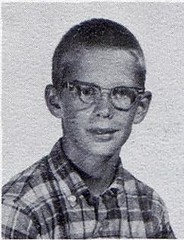
John Luebke, fourth-grade student at St John Elementary School in Seward, Nebraska

David Luebke, born in 1960.

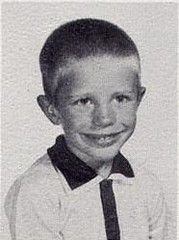
David Luebke, kindergarten pupil at St John Elementary School in Seward, Nebraska

Thomas Luebke, born in 1962.


The Luebke family lived in Hillcrest Avenue House 07 from 1961 to 1962.

Then they lived in Fairlane Avenue (east side) House 06 from 1962 to 1969.

Fairlane Avenue (E) House 06

This house was occupied by the family of Fred Luebke from [year?] to [year?].

Monday, April 27, 2009

John Luebke Remembers

[John Luebke now is named Seikai Luebke and has the title of Reverend in the Buddhist religion.]

John Luebke, fourth-grade student at St John Elementary School in Seward, Nebraska

Memory is by turns both fragile and resilient; having a good memory is a mixed blessing —- one remembers a lot of things -- and whether you recall them as good, bad or indifferent is another question. So it is with me, whom anyone reading this blog would remember as John Luebke. As to why a significant portion of my brain’s memory capacity is devoted to my eight years of living in Seward, Nebraska, I can’t say. But as Mike Sylwester has pointed out, those were very formative years for a whole bunch of people: we were baby boomer children growing up in an ethnic-religious enclave —- the German-Lutheran side of a small Nebraska town —- during a poignant era for social change, the late 1950s and 1960s. The homogeneity of that religious enclave, the shared experiences and beliefs, made for indelible memories of a time and place.

My overriding impression of that time and place is of living on an island of uniformity in what is commonly thought of as the Middle of Nowhere (Nebraskans bristle a bit at that perception). We were a chosen people, such as the Israelites in the Christian Bible; and surely this self-identity has much to do with the importance given to religion and Bible-study in the sub-culture. It was a great place for kids to grow up. In talking to a wide variety of people in my life, I have learned that it was, in a word, idyllic. The freedom to roam the streets of a safe, small town, innumerable places to explore, and the relatively high culture of an academic environment, Concordia Teachers College combined to make this a special environment to have spent one’s most open, formative years.

Regardless of whether one leaves the subculture and moves on into a different one, as I did, or the general culture, you retain the impressions, memories, and mental programming of where you grew up. I have chosen to view it all positively, for memory is also malleable and subjective. St. Johns Lutheran School was a good place to get a grade school education, and Concordia was a rung on the career ladder of my father, as it was for many of the families mentioned in the blog. That world delivered us to the next one, that of state-run academia: the University of Nebraska and the city of Lincoln.

The moves my family made -- first from Southern California where my father was a Lutheran grade school teacher and principal, to Concordia, and then to the University of Nebraska -- were typical of many families in that neighborhood, including the Sylwesters, the Schwichs etc. This brings to mind another divide I recall as a kid in school: the one between town folk who were firmly rooted in Seward and its surrounding farmland, and those of us for whom Seward was a stopover. There were what were called “faculty brats” —- generally pretty smart kids from academic families who could also be, at times, well ... bratty. I was certainly one of them.

In my 50s I have a very different perspective, having left the Lutheran Church and Christianity altogether, than some of my peers growing up who have stayed in that religious paradigm. I grew up with it but, by choice, it ended 35 years ago when I embraced a completely different religious path. So what might seem normal to one of my school friends today, might well seem like a distant and strange set of circumstances to me. And although I very definitely went through a period of time in my life in which I was happy to forget all about my childhood environment, as a mature adult I have chosen to embrace it —- and that is why I am writing now.

One incident which is both funny and emblematic of what I am writing about occurred in 1979. I had made my first visit home to my family over a year after having been ordained a Buddhist monk, and was about to get on a plane back to California. So I was with my family in the Lincoln airport —- not an unlikely place to encounter someone from Seward —- and as it turned out, lo and behold, we met the Blomenbergs. I was dressed in a black clerical shirt with the white tab, and slacks at the time and looked for all the world like a Catholic priest. Mrs. Blomenberg cast a critical eye on me and inquired whether I had become a priest or a monk, to which I answered affirmatively. Not wanting to provide any information that was not immediately sought after, I added nothing else, but she kept at it and asked if I were, as it appeared, a Catholic priest? Nope, I said, I’m a Buddhist monk. At that point her jaw literally dropped, and she gasped while Mr. Blomenberg smiled weakly. My parents were embarrassed; I thought it was supremely funny, but fought back the temptation to laugh. These things happen in small world.

I have visited Seward one or twice per decade since leaving in 1969. I am always surprised by how little it changes, at least by comparison to California, but also at the rapid evolution of my old neighborhood from a windy, edge-of-town place with lots of new houses and construction, to an established neighborhood with the softening effects of trees, landscaping, and time. And of course things seem smaller than they did growing up; as a kid everything is enormous to your small, plastic body that you hurl at the world.


History, Geography & Specific Memories:

In 1961 my family moved from the greater L.A. area to Seward —- a huge change of environment. We settled into a house on the northeast corner of Columbia Avenue and Hillcrest Drive, which I understood was the old Schlueter farm house. The college had bought it and we lived there one year. The barns and horse corrals were gone, but I have vivid memories of the railroad tracks that abutted the back of the property; this was a Chicago & Northwestern line, if memory serves me, which was later abandoned in the mid-60s, but played a role in the adventures of boyhood.

The Hans family lived next door (Lanny, Lane and Lynette were the first kids I met in Seward) on Hillcrest. To the west, where there are now houses, was an empty field where some years later our vacation Bible school class, taught by Rupert Gieselman, would attempt to cut sod with a funky old rented sod cutter in an effort to build a sod house. Catty-corner was an empty St. John’s school yard where I can remember high jumping during track season before the new church was ultimately built in about 1968.

Meanwhile, like many families then, we had a house built in the same neighborhood, no more than a quarter mile away on Fairlane Ave. As one travels east on Hillcrest, the streets one passes are: Kolterman, Fairlane, Plainview, Sunrise, and Eastridge. To this day I love the prosaic street names Fairlane and Plainview —- how perfect for Nebraska!

So we moved to 1150 Fairlane, which was then a gravel road. Helping my father paint the house was my introduction to hard work, which has been the incurable addiction of my life. I remember watching with utter fascination a street paving crew of largely Black men, obviously from an Omaha or Lincoln-based construction company, coming in to pave Fairlane. One Black man had a mouth full of gold teeth and, being six or so, I was amazed to learn that Black people had gold teeth! Wow. And there was always a house under construction somewhere, with the attendant dirt piles. Dirt piles were an endless source of adventure back then, and dirt clods the perfect projectile and offensive weapon. A house under construction was a great place to play: think of it —- a huge jungle gym! The distinctive smell of newly milled construction lumber. Those metal electrical box knock-outs that were just about exactly the size of a quarter. Mud puddles. For a seven-year-old, this was heaven. Street projects, with the assemblage of huge concrete storm drain sections, it was the same deal.

The Lemkes moved in right about the same time that we did; Mark quickly became my closest friend. I have a vivid memory of Bob Lemke, who owned two “bugs” at the time —- small, black, sort of beetle-shaped cars -— driving out into the field behind our row of houses, tying the barbed fire fence to the bumper of one bug, and proceeding to rip the fence from its posts by driving headlong out into the field. That field, now a street with houses on each side, was our baseball and football field throughout the decade of the 60s, and kids from all over our part of town would come over to participate in pick-up games—baseball in the spring and early summer, football in late summer and fall.

Just on Fairlane, there were five kids my age: Brad Peter, Debbie Fischer, Mark Lemke, John Streufert and me. Obviously, if you go there now, none of those people are still there and houses have long ago been built to fill out the street, but at the time, Fairlane was a virtual dormitory for St. John’s Lutheran School and Concordia Teachers College.

For Mark Lemke and me, Plum Creek was perhaps the ultimate destination, particularly in the winter when it was possible to walk directly on the ice above the water. Times when the ice was thin and one could punch holes in it had the attraction of added risk. One time I stepped in an animal trap someone had set; neither Mark nor I could undo the thing, so it required an embarrassing trip home to ask Bob Lemke to come and liberate me. I remember sledding down that delightfully long East Hill towards Plum Creek, and also trips to 5th Street, which was a drag strip for kids using those narrow-runner sleds.

Paper routes, meanwhile, were a year-round occupation for kids my age (I had two paper routes); we were told that this was a way to learn to run a business and be responsible. I cannot argue with that even now, and learning to get up early day after day was something that has served me well in life.

Growing up in small-town Nebraska, sports could almost be described as the meaning of life, and football as a religion. I rarely missed a Concordia College or High School home football game. Whatever the season, there was a sport: football, basketball, track and baseball —- autumn, winter, spring and summer. In winter you could go swimming at Concordia and in summer at the famous round Seward municipal pool. In summer there was Little League baseball, and in winter Little League basketball. One autumn I won two levels of Ford Punt, Pass & Kick competition, which was a big deal back then.

On two occasions when my mother was in the hospital, women from the community would bring over cooked food to our house in the evening for dinner —- that was impressive. I have gratitude for Seward and to the neighborhood and the people who lived there at the time. No environment is “perfect”, but anywhere that people are basically loving and caring of each other, human beings will grow up in a healthy way that affords them opportunities to be successful in their adult lives.

Wednesday, April 8, 2009

East Hillcrest House 07

Postal address: 116 East Hillcrest Drive

This house was occupied by the Schlueter family from [year?] to [year?].

Then this house was occupied by the family of Fred Luebke from [year?] to [year?].